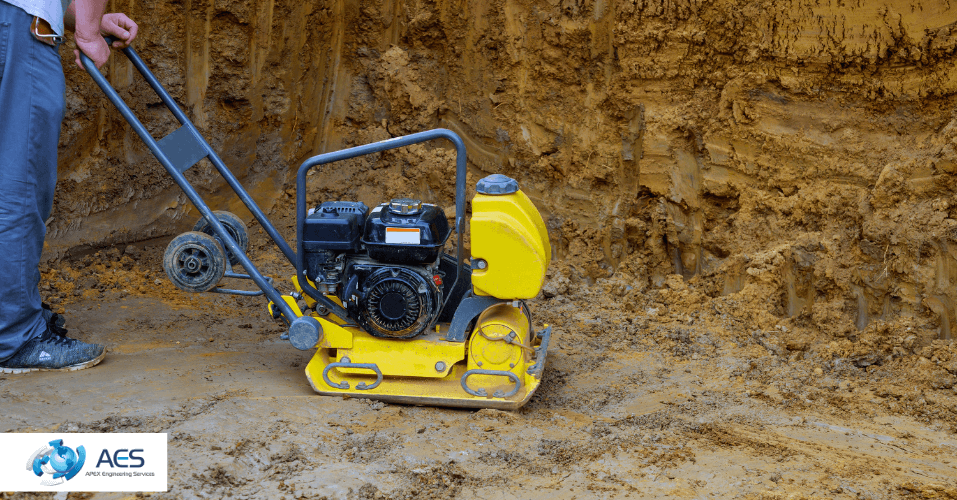
Construction is a process that includes a number of phases, and these stages can be completed with the help of massive equipment like concrete breakers, jackhammers, bulldozers, excavators, and many more.
However, these tools usually generate unbearable noises and vibrations that are not only unpleasant for the ears but also for the surrounding commercial and residential buildings.
To politely handle the situation, Apex Engineering Services is providing vibration monitoring in construction, through which contractors can easily get notified when the level of vibration exceeds a particular limitation.
So, through this blog, project owners will learn about the possibility of what was previously thought impossible.
Importance of Vibration Monitoring in Construction
Piling is the most crucial part of construction where the strong foundation for a new building is created, but it is not a peaceful procedure; rather, it is louder. This is just one aspect, but many scenarios can occur on the site, like demolition of old buildings, and to enhance the bearing capacity of the ground, the repeated step where heavy weight is lifted and dropped from a height is the source that might damage other structures.
To prevent it, the engineers of AES have arrived with their advanced sound monitors and vibration sensors, which provide data to the project owner instantaneously. Most importantly, in the UK, there are strict rules and regulations for noise in construction. This highlights that the exceedance of allotted hours of noise and specific sound levels will result in a penalty.
Therefore, to make everything run smoothly, it is crucial to identify that builders are working without risking anything.
How Can Engineers Investigate That?
First, they install one sensor on the construction site (source) and the other one on the nearby building.
The placement of sensors is according to the pathway of ground-borne vibration (a type of vibration which is generated by humans through heavy equipment on the ground).
After the installation, the engineers have access to the vibration data that is produced by the movement on site.
Tip: During construction vibration monitoring in the UK, there is one important step that engineers should not neglect: to inspect the possibility that the installed sensor on the construction site might not be the source if the building sensor is not receiving any vibration.
Moreover, the clear and accurate time series data of vibration levels will assist contractors to make appropriate decisions so that no structure, whether home or office, will be damaged.
What Happen If the Sound Level Unknowingly Exceeds From Predefined Threshold?
There is no need to take stress when professionals of Apex Engineering Services are here to ensure that your construction won’t harm someone else's property.
The project owners receive notification if vibration and noise surpass the predetermined limit. Hence, based on this, constructors minimise the impact of loudness.
Notice: In order to avoid making mistakes that all contractors normally make while setting vibration thresholds, give a read to this blog, and it might be helpful in the future.
The answer to “how vibration monitoring can protect surrounding buildings” is vivid, just like a mirror. Noise and vibration monitoring is the way through which a disturbance that is produced on a construction site can be conveniently evaluated.
However, lessening the levels of vibration after remotely visualising the data will protect the historical or sensitive buildings from the unannounced cracks.
What Steps Contractors Take To Minimise Vibrations:
- Investigate the actual origin of noise and vibration through deeply analysing the type of equipment.
- Change the procedure of your work by utilising different tools in a soft way.
- If the still vibration cannot be reduced, then taking breaks between tasks or rotating in shifts is given priority.
Did You Know?
Ignorance of construction vibration monitoring in the UK can lead to delays in the project and sometimes an increase in the cost.
What are the questions that people have for Apex Engineering Services?
Why are noise and vibration monitoring important during construction?
Construction activities like piling, demolition, and excavation generate strong ground vibrations and sound that can damage nearby structures, especially older, historical, or sensitive buildings. Vibration monitoring in construction ensures these vibrations stay within safe limits to prevent cracks, weakening of foundations, or costly disputes.
How does vibration monitoring actually work?
Vibration sensors (monitors) are installed both at the construction site and on nearby buildings. These sensors measure ground-borne vibrations in real time and send immediate data to engineers or project owners so they can act quickly if levels rise above safe thresholds.
What happens if vibration levels exceed the allowable limits?
If vibration levels surpass the predefined threshold, automated alerts notify contractors instantly. Construction teams can then adjust their activities, such as slowing down heavy machinery or changing techniques, to reduce the impact and avoid structural damage or penalties.
Is vibration monitoring required by law in the UK?
Yes. There are strict UK regulations that control both noise and vibration during construction. Exceeding permitted sound levels or working outside allotted hours can lead to fines, legal consequences, or project delays. Monitoring helps ensure compliance and keeps the project running smoothly.
Can vibration monitoring in construction help save costs on a project?
Absolutely. By preventing unexpected structural damage, costly repairs, and potential legal claims from nearby property owners, vibration monitoring reduces risk. It also avoids delays that arise from complaints or shutdowns, which help contractors complete the project on time and within budget.
Conclusion
In order to ensure that construction work proceeds safely and does not damage neighbouring buildings, noise and vibration monitoring is essential. However, project owners can quickly identify when vibration levels surpass permissible limits and take prompt action to minimise structural damage with the aid of advanced sensors and real-time data.
Furthermore, by making vibration monitoring in construction a top priority, contractors can prevent expensive delays and fines in addition to safeguarding nearby assets, especially delicate and historic buildings. To put it simply, vibration monitoring of Apex Engineering Services results in safer, more responsible, and smoother construction. So, reach out to their engineers and start your project peacefully and efficiently.