Some contractors now also use robotic layout printing, such as HP SitePrint, which prints setting out marks directly onto the slab from digital design files, further reducing manual steps in the process.
Types of Setting Out on a Construction Site
Setting out covers several distinct but related tasks, often carried out by the same site engineering team.
- Horizontal setting out: Establishes the plan position of structures, using baselines, grid lines, or coordinates as reference systems.
- Vertical setting out: Establishes correct levels and heights, referencing benchmarks and datums to ensure floors, foundations, and drainage fall at the right elevation.
- Survey control: Provides the fixed primary and secondary reference points that all subsequent setting out is measured from, usually established through dedicated survey control services.
- Detailed structural setting out: Covers specific elements such as pile positions, steel bolt locations, and concrete shutter lines, which require tighter tolerances than general building layout.
Combining these types of setting out gives a project a single, coordinated reference system that every trade can build from.
Digital Setting Out and Building Information Modelling
Setting out has moved a long way from tape measures and paper drawings. Most modern site engineering teams now work from digital design files, often linked to Building Information Modelling, or BIM. A BIM model holds coordinates for every element of a structure in one intelligent 3D file, which can be loaded directly into a total station or GPS controller on site.
This shift matters for accuracy because it removes several manual steps where errors traditionally crept in. Coordinates no longer need to be read off a paper drawing and typed into an instrument by hand. Instead, the same dataset used to design the building is used to set it out, so any change made in the design model can be reflected on site without re-measuring from scratch. On complex projects with multiple design revisions, this connection between digital design and physical setting out helps keep every trade working from the current version of the plan, rather than an outdated printout.
Key Benefits of Professional Setting Out Services
Working with experienced site engineers for setting out services delivers benefits that extend well beyond simply marking points on the ground.
- Fewer costly errors. Removing manual calculations and paper drawings reduces the chance of mistakes reaching the construction stage.
- Faster programme delivery. Data transferred directly from design to site speeds up the setting out process compared to manual methods.
- Consistent reference points. A properly established control network means every trade works from the same coordinates throughout the project.
- Reduced rework. Catching positioning issues before concrete is poured or steel is fixed avoids expensive remedial work later.
- Confidence for contractors and clients. Verified setting out data gives project teams assurance that the build matches the approved design.
These benefits are one reason setting out is rarely left to general site labour and is instead carried out by trained site engineers using calibrated equipment.
Common Setting Out Examples in Construction
Setting out applies across almost every type of construction project, though the specific elements vary by sector.
- Foundations and pile positions: Marking the exact location of foundations, pile caps, and contiguous walls before excavation or piling begins.
- Building layouts: Positioning walls, columns, and structural grids to match architectural drawings.
- Roads and highways: Setting out carriageways, kerb lines, and haul roads on infrastructure projects.
- Drainage systems: Establishing the correct line and fall for drainage runs so water flows as designed.
- Steel structures: Marking bolt positions, holding down bolts, and steel frame locations to the tight tolerances steel erection requires.
- Concrete and glazing: Defining shutter lines, slab extents, and mullion or transom positions for cladding and glazing packages.
Each of these examples depends on the same underlying principle: transferring design intent onto the physical site with enough accuracy that later trades can build with confidence.
Choosing the Right Partner for Construction Setting Out
Because setting out underpins almost every later stage of a build, it is worth choosing a team with genuine site engineering experience rather than treating it as a minor task. Look for providers who combine robotic survey equipment with industry standard software, who can demonstrate experience across your type of project, and who understand how setting out integrates with survey control and topographical data already gathered for the site.
At Apex Engineering Services, our setting out engineers work directly from design drawings, transferring data to site using robotic instruments and GPS technology so that every reference point is accurate from the start.
FAQs
What is the difference between setting out and survey control?
Survey control establishes the fixed reference points a site is measured from. Setting out uses those points to mark the position of individual structures.
Who carries out setting out on a construction site?
Setting out is usually carried out by qualified site engineers or surveyors using total stations, GPS equipment, and design data.
What equipment is used for setting out?
Common equipment includes total stations, GPS or GNSS receivers, levels, and increasingly, robotic layout printing systems.
Why does setting out matter for small projects too?
Even small projects rely on accurate foundations and levels, so poor setting out can still cause costly rework regardless of project size.
Can setting out errors be corrected once construction has started?
Some errors can be corrected, but the cost and disruption increase significantly once concrete is poured or structures are fixed in place.
Conclusion
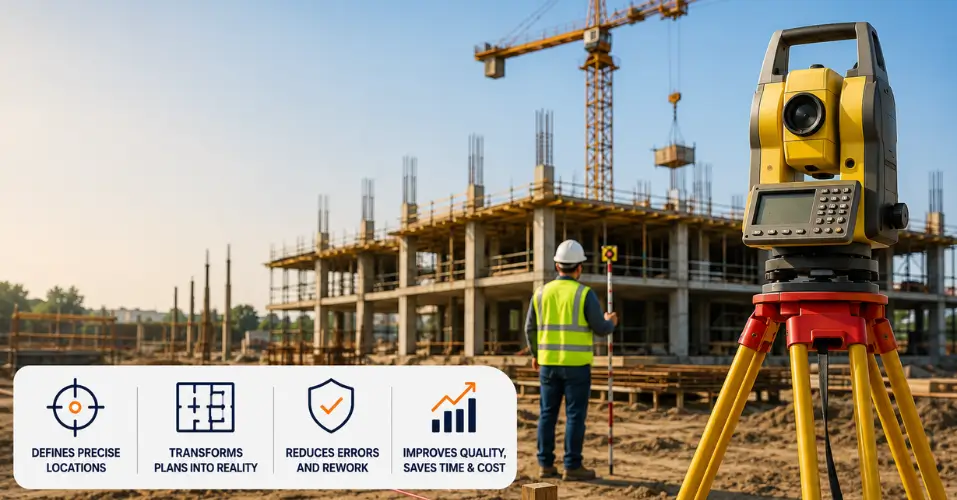
Construction setting out turns a design drawing into a physical reality on site, establishing exactly where and at what level every structure should sit. Getting it right at the start of a project protects the accuracy of everything that follows, from foundations to finishes, while reducing the risk of costly rework and delay. Whether you are building a single commercial unit or managing a large infrastructure project, investing in professional setting out services is one of the most effective ways to keep a construction programme accurate, efficient, and on schedule.